



Get To Know Sir Augustus Charles Gregory, The Man Who Built Rainworth House

Built in 1862, Rainworth House is known as one of the few surviving original timber houses in Bardon. Get to know the life of Sir Augustus Charles Gregory, the man behind this historic home. 


Read: Discover the Rich History of Rainworth House in Bardon


Augustus Charles Gregory was born on 1 August 1819 in Farnsfield, a large village in Nottingham, England. He was only 10 years old when his family moved to Western Australia on board a ship called the Lotus.

Sir Augustus Charles Gregory
Sir Augustus Gregory (Photo credit: John Oxley Library, State Library of Queensland. Negative number: 16036)

Queensland’s First Surveyor-General

He became the first Surveyor-General of Queensland, a position he held for 16 years, from 1859 to 1875. The position was originally created for Queensland, when it became a separate colony in 1859.

As the Surveyor-General, he was responsible for controlling and regulating the survey, sale, occupation and management of Crown Lands in Queensland.

Trained under John Roe, Sir Gregory showed great aptitude, bushmanship and an ability to manage men, qualities that aptly fitted him to the position of expedition leader.

Sir Gregory was described as someone who worked with speed and efficiency, and an ability “to institute and oversee a large, complicated and important Government department.” 

The position was abolished in 1993, with Neil Graham Divett having served only three years of his term.

Explorer

Sir Augustus Charles Gregory
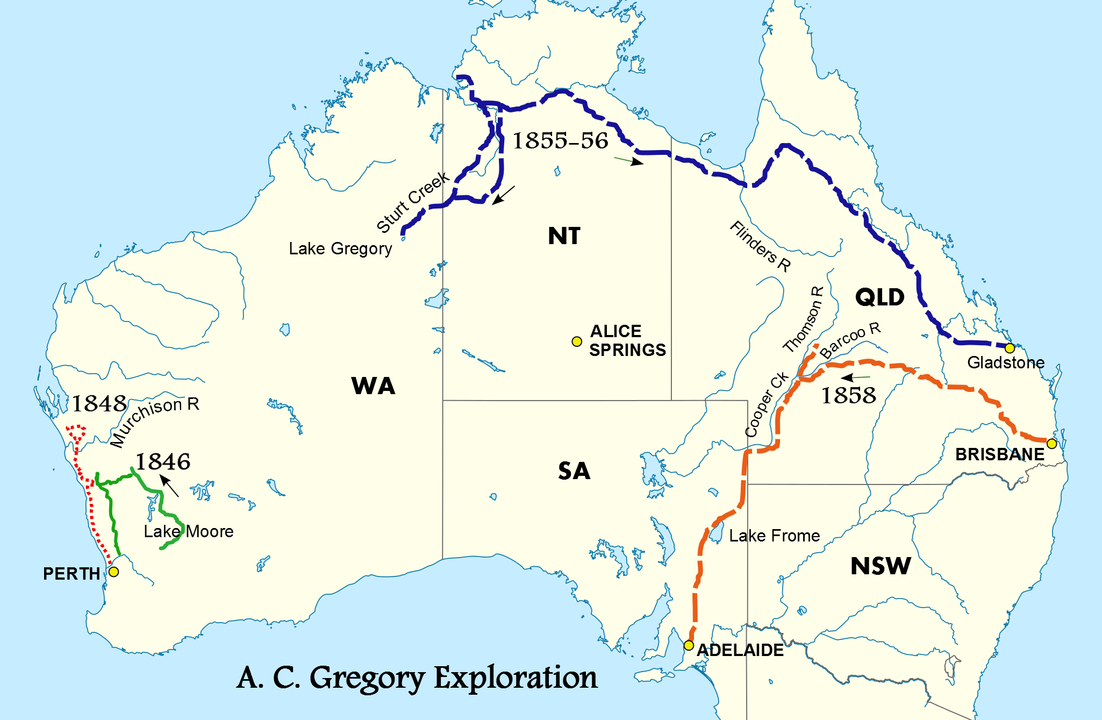
Sir Gregory’s Australian exploration routes (Photo credit: CC BY-SA 3.0/Summerdrought/Wikimedia Commons, Adapted from Australian Geographic map 1995)

Besides being a Surveyor-General, Sir Gregory was also known for being one of Australia’s greatest explorers. He undertook major expeditions from 1846 to 1858. 

During his first exploration in 1846, he was joined by his brothers, Francis Thomas Gregory and Henry Churcham Gregory. They explored a considerable amount of the country, with four horses and seven weeks’ provision.

In 1855, the Royal Geographical Society in London sponsored Sir Gregory’s North Australian Expedition. The purpose of the said expedition, which lasted for over a year, was to examine the natural resources of the region with a view to potential settlement. 

His last major expedition happened in 1858, when he led an expedition for the New South Wales government in search of German explorer Ludwig Leichhardt.

Rainworth House

Sir Augustus Charles Gregory
Rainworth in 2009 (Photo credit: Heritage Branch staff)

Sir Augustus Charles Gregory himself built the house in 1862. At the time, Rainworth House was the only farmhouse in the area. The name Rainworth was taken from a small town in Nottinghamshire which is close to his birthplace at Farnsfield.

He died unmarried in his home 25 June 1905 at the age of 85. His resting place can be found at the Toowong Cemetery.


Read: Bardon’s Blast From the Past: A Walk Down Memory Lane Through Heritage Homes


Today, there’s a few places in Brisbane that honour Sir Gregory, including Milton’s Gregory Park and Toowong’s Gregory Street. In Western Australia, the coast to the west of Northampton was also named Port Gregory, after him, as well as Lake Gregory, the freshwater lake near the northern Great Sandy Desert. 

Updated 30-November-2025
5 Interesting Details You Might Not Know About Rosalie

Rosalie covers the short boundaries of Fernberg Road, Haig Road, and Thomas Street and is widely regarded as one of the smallest suburbs in Brisbane. Here are five interesting details to know about this neighbourhood.


1. Rosalie is dubbed “Brisbane’s forgotten daughter.”

Following its downgrade from a suburb to a locality in Paddington in the 1970s, the locality’s name has been erased from the Post Office, the buses, and public or commercial buildings. Even the locals who live on the boundaries of Rosalie via Paddington, Milton or Rainworth chose the name of the suburb they wished to live in.

2. Rosalie’s name has two origins. 

First, it was believed that Rosalie was named after a terminus by pastoralist and politician John Frederick McDougall, who bought land in the area in 1864. Mr McDougall also owned Rosalie Plains in Darling Downs.

John Frederick McDougall of Rosalie
Photo Credit: Wikimedia Commons

However, another version also cites that the name came from one of the local transportation servicing Oxford Estate when it was common for vehicles to bear girls’ names. But just who is Rosalie? That remains a big mystery.

3. Milton State School was formerly known as the Rosalie State School. 

Around the 1880s, Rosalie’s population grew and it was clear that a local school was needed. The government identified a site along Bayswater Road to build a single-storey structure with one classroom. In 1889, Rosalie school welcomed over 160 pupils and Alfred Wall was its first headmaster, who served for nearly three decades. Rosalie School’s name was changed to Milton School after two years.

In 1911, the Creche and Kindergarten Association of Queensland established the Rosalie Kindergarten on Elizabeth Street. Through the suburb’s changes and downgrade, enrolments did decline but the kindergarten has thrived and continues to operate as the C&K Rosalie Community Kindergarten and Preschool.

4. There used to be a Rosalie Police Station.

The police station was located on the corner of Boys Street and Fernberg Road. It was established in 1886 with Constable Thomas Macdonald as the first Officer-In-Charge. The station’s structure was demolished in 1911 and was replaced with a new building a year later. However, in 1964, its operations was shut down with the realignment and redistribution of police functions. The building eventually became a private residence.

5. Albert Hall on Baroona Road was Rosalie’s centre of social activities.

Albert Hall was Rosalie’s earliest social centres until the construction and opening of the School of Arts Committee around the corner of Baroona Road and Nash Street in the late 1920s. Today, these combined properties are now known as the Rosalie Village, the neighbourbood shopping and dining centre.


Updated 25-November-2025
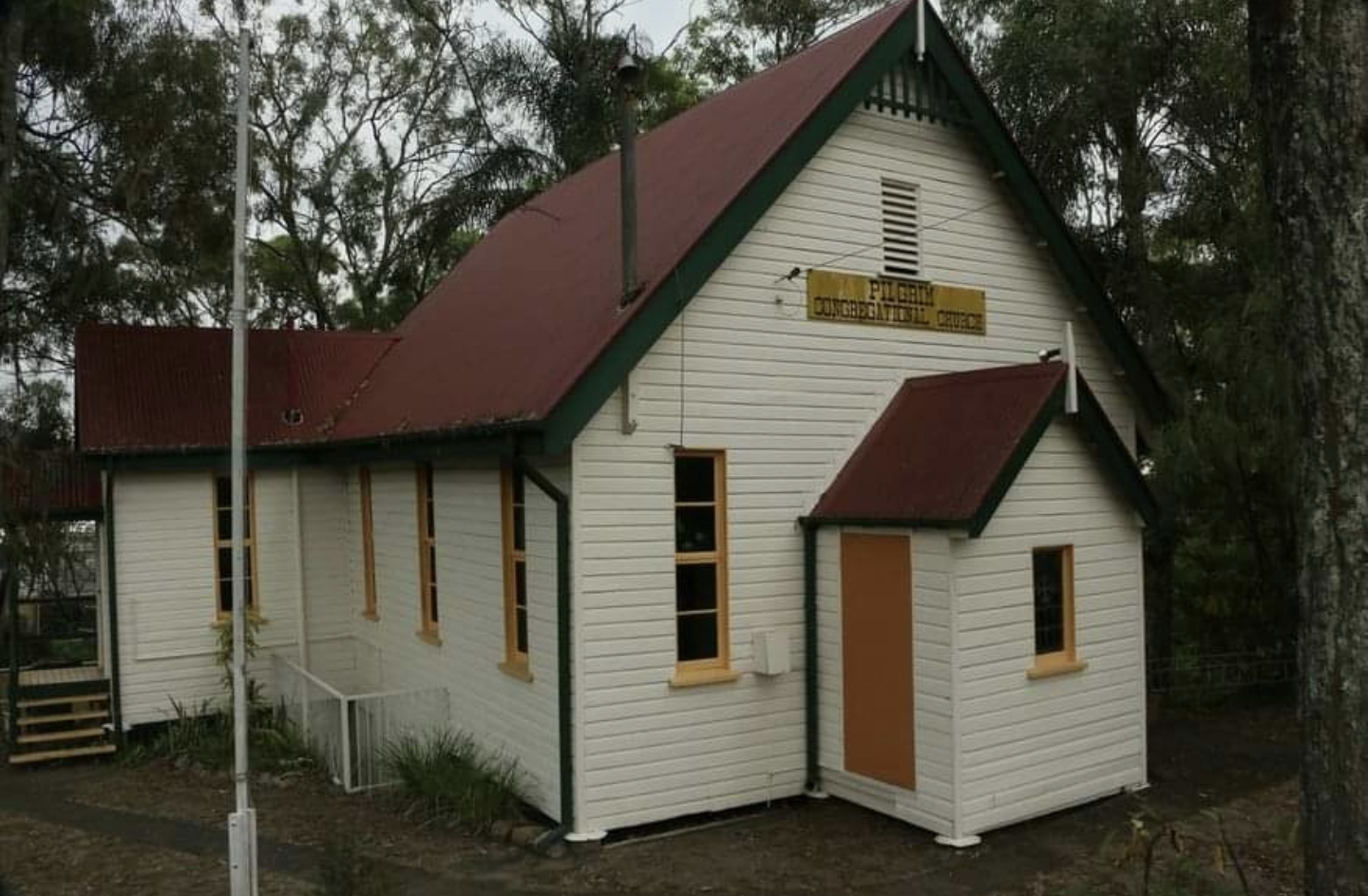
A Journey Through the History of the Bardon Pilgrim Congregational Church

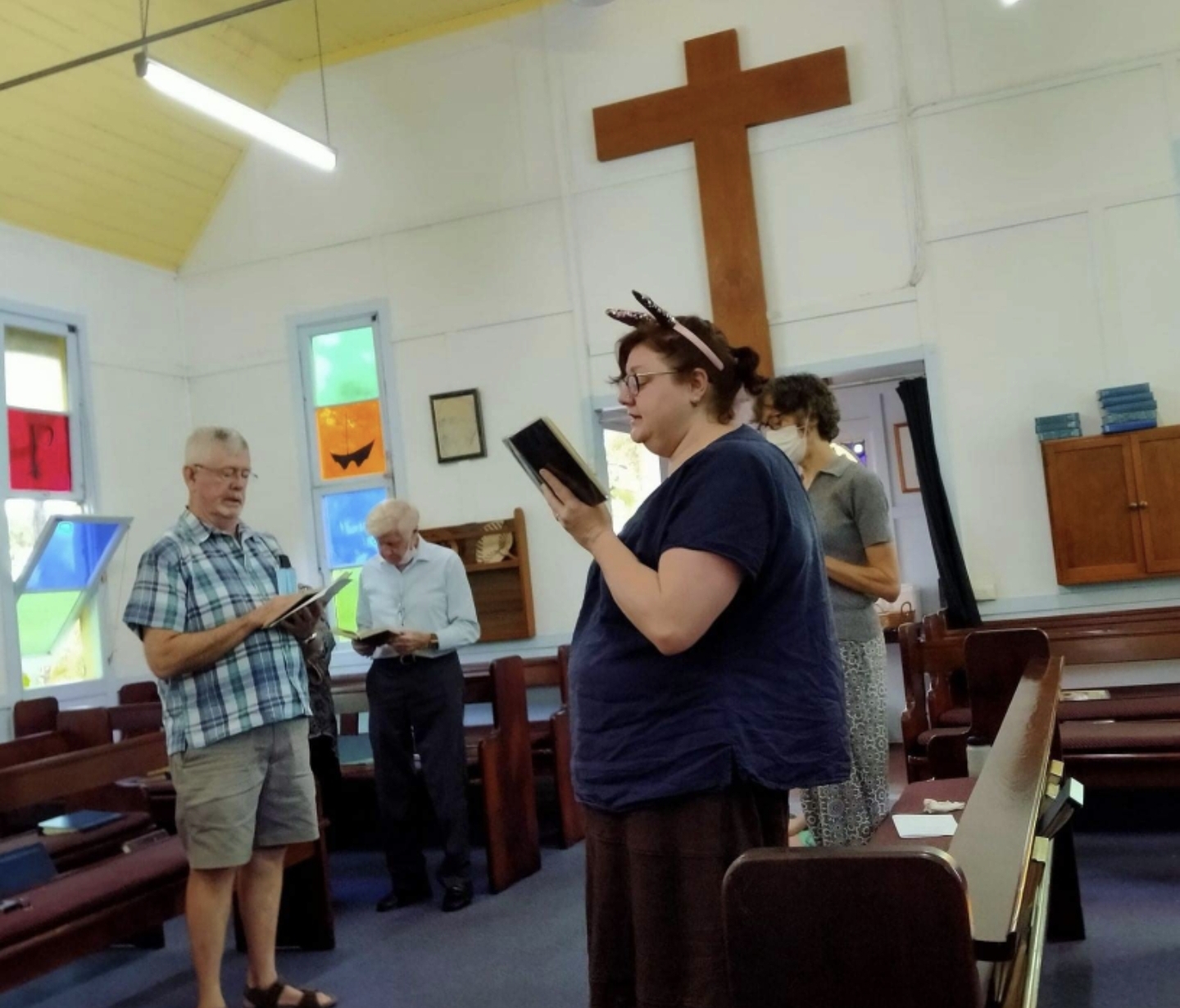
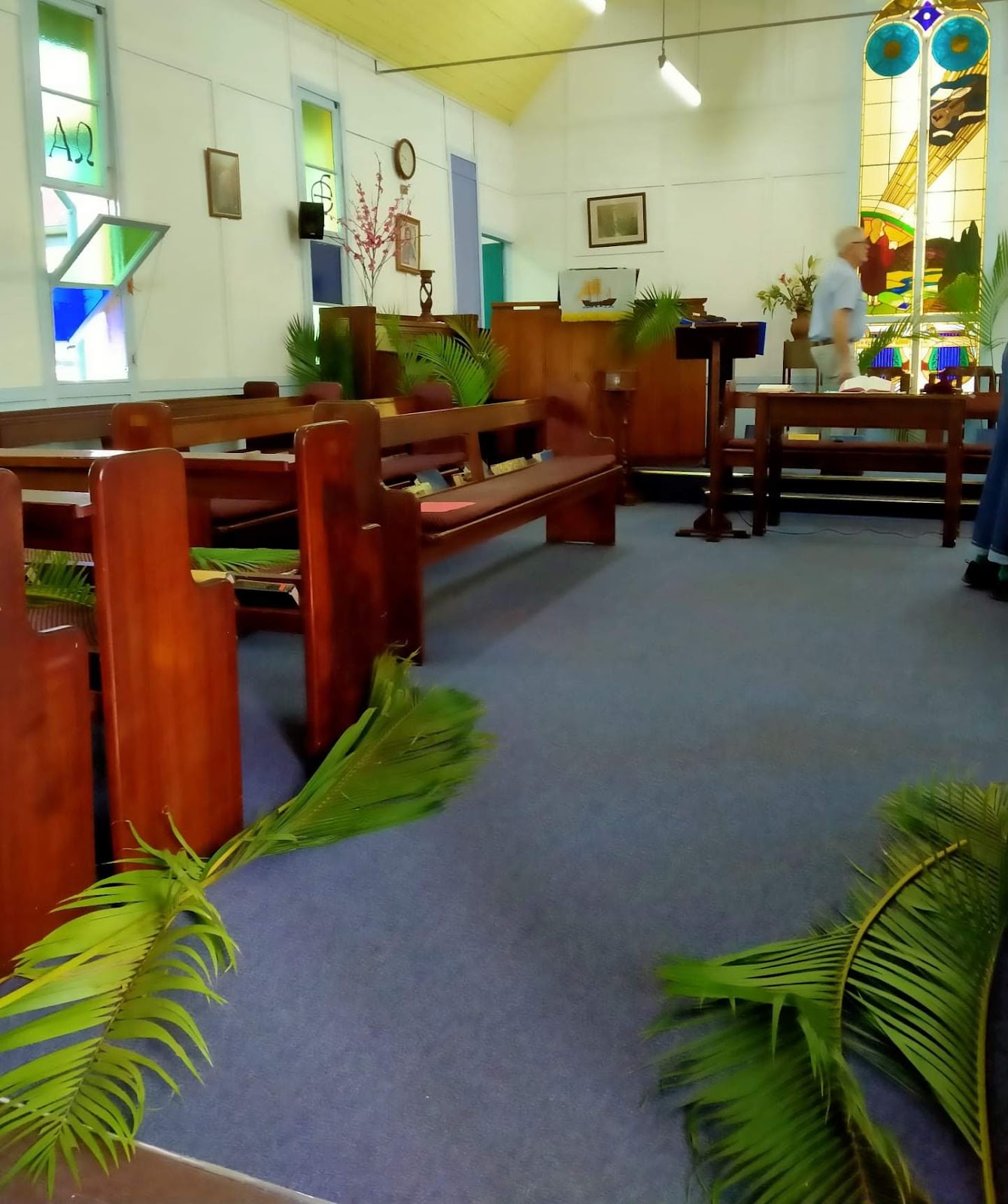
One of the most iconic places in Bardon is the heritage-listed Bardon Pilgrim Congregational Church at Simpsons Road. Let’s reflect on its remarkable journey – from its humble beginnings in the early 1900s to its enduring legacy as a cornerstone of the community.


Read: Historic Bardon Property Linked to Royal Visit Hits the Market


History and Architecture

The story begins with the visionaries of Bardon, individuals like HM King and ES Thompson, who recognised the need for a Protestant church amidst the growing community.

Their determination led to a bold decision – the Queensland Congregational Union suggested relocating an existing Congregational church from Cannon Hill to Bardon in 1927, given that they were willing to pay the cost involved. This act of faith and perseverance laid the foundation for the church’s enduring legacy.

The Queensland Congregational Union was established in 1861 under the Religious Educational and Charitable Institutions Act of the same year, with Congregationalists active in Queensland since 1853. The organisation has been involved in providing out-of-home care for children since 1929. In June 1977, the Australian Congregationalists merged with the Presbyterian and Methodist churches to create the Uniting Church of Australia.

Photo credit: Pilgrim Congregational Church/Facebook 

The relocation of the church was no small feat, requiring considerable financial investment and community support. The plan received complete approval, even though the cost of relocating the building back then was calculated to be £136, and the overall expense of setting up the church was estimated to be £500.

Bardon Pilgrim Congregational Church
Photo credit: Pilgrim Congregational Church/Facebook 

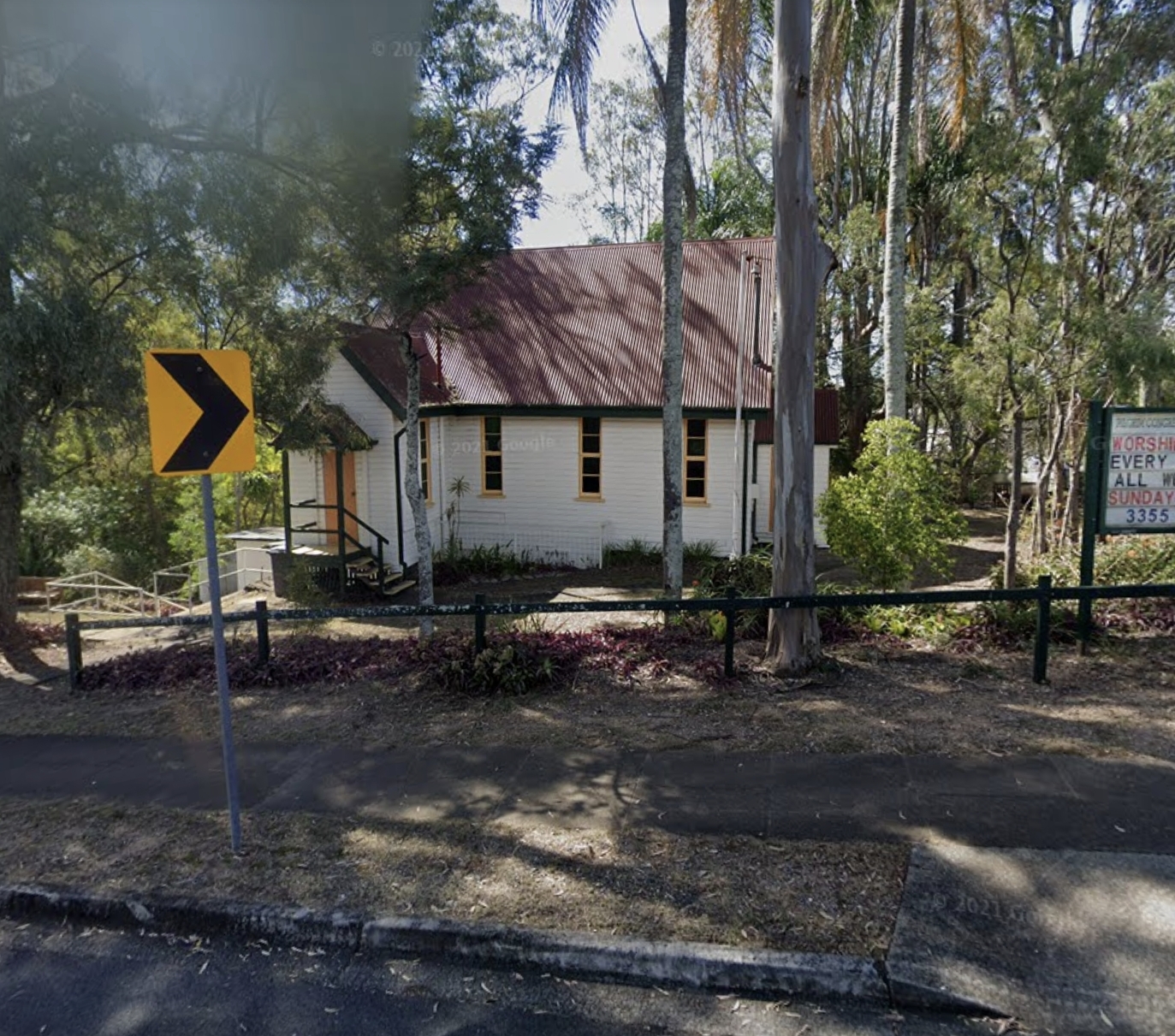
The structure itself was believed to be constructed during the early 1900s, given that it’s a modest example of a Federation Carpenter Gothic church, which was very common during this period. Its aesthetic appeal derived from its clean, simple design and picturesque, leafy surroundings, lending it a shady aspect.

Photo credit: Pilgrim Congregational Church/Facebook 

The church was founded in Bardon during a period of rapid population growth. In 1903, Ithaca Shire had 3000 residents, but by 1922, this had increased more than sevenfold, making it easier to establish community services like churches. Before the late 1880s, Bardon residents had to travel to Paddington, Rosalie, or Milton for church services as there were none available locally.

Milestones Along the Way

Bardon Pilgrim Congregational Church
Photo credit: Google Street View 

Over the decades, the Bardon Pilgrim Congregational Church bore witness to numerous milestones, each marking a chapter in its rich history. 

From the stump capping ceremony in 1927, attended by the Deputy Mayor of Brisbane Alderman A A Matson, to the poignant unveiling of a centenary plaque in 2014, the church stood as a silent witness to the passage of time and the enduring spirit of faith.


Read: Get To Know Sir Augustus Charles Gregory, The Man Who Built Rainworth House


Enduring Legacy

As it approaches its centennial in three years, the Bardon Pilgrim Congregational Church stands as more than just a place of worship – it is a living testament to the resilience, faith, and community spirit of its founders. For nearly a century, it has been a beacon of hope and solace for generations of parishioners, leaving an indelible mark on the tapestry of Bardon’s history.

Updated 20-November-2025
Long-Term Owners List Family Home After 30 Years in Bardon

A Bardon couple is preparing to sell their family home after owning the Bowman Parade property for 30 years.


A Home Purchased in the Mid-1990s

Mark and Kara Ellings bought the house at 83 Bowman Parade, settling the purchase in January 1995 for $212,000. The decision followed extended negotiations with the previous owners, eventually reaching an agreement that allowed the couple to secure the home where they later raised their three children.

The property last changed hands in 1988 for $126,500, according to historical records. Over time, the home became the centre of family life, with the couple choosing the location after returning from travel in Europe and wanting to live closer to the city.

Bardon family home sale
Photo Credit: Pexels

Upgrades and Growth in Property Value

Across three decades, the pair completed several improvements, including a pool, carport, covered back deck and a new master suite. These changes complemented the home’s character features, including timber floors, VJ walls and fretwork.

PropTrack data shows that Bardon’s median home price has risen more than tenfold since the Ellings bought their property, currently sitting at $1.892 million.

The house now carries an estimated value of $2,395,000, supported by its four bedrooms, two bathrooms, two car spaces and 590m² lot. Satellite analysis lists a 249m² building size, 42% building coverage and an 8-metre roof height. The home also has HFC NBN, 5G coverage and falls within the Ashgrove State School and The Gap State High School catchments.

Changing Ownership Patterns

Place Woolloongabba agent Savva Koulouris, who will handle the listing, observed that long-term ownership of this length is becoming less common. He noted that younger generations often transition through apartments and townhouses before buying a standalone home, influenced by affordability patterns.

Brisbane real estate
Photo Credit: Pexels

A Final Celebration Before Listing

The Ellings said the home had hosted numerous family milestones, with the back deck serving as the venue for birthdays and gatherings. Their daughter’s 30th birthday celebration this weekend will be the final major event before the property goes to market next week.

Looking Ahead


The couple said they would miss the Bardon community and the local places they had frequented over the years. They expressed hope that the next owners would form their own memories in the home, marking the beginning of a new chapter for the long-held property.

Published 19-Nov-2025

Bardon’s Tony Sutton Takes on Vertical 5km Challenge to Raise Funds for Blood Cancer

In November, Bardon resident Tony Sutton will tackle the Vertical 5km Challenge, a fundraising collaboration between Bloody Long Way Mission and the Leukaemia Foundation. 


Read: St Joseph’s Bardon Wins STEM Competition With AI Project to Help the Elderly


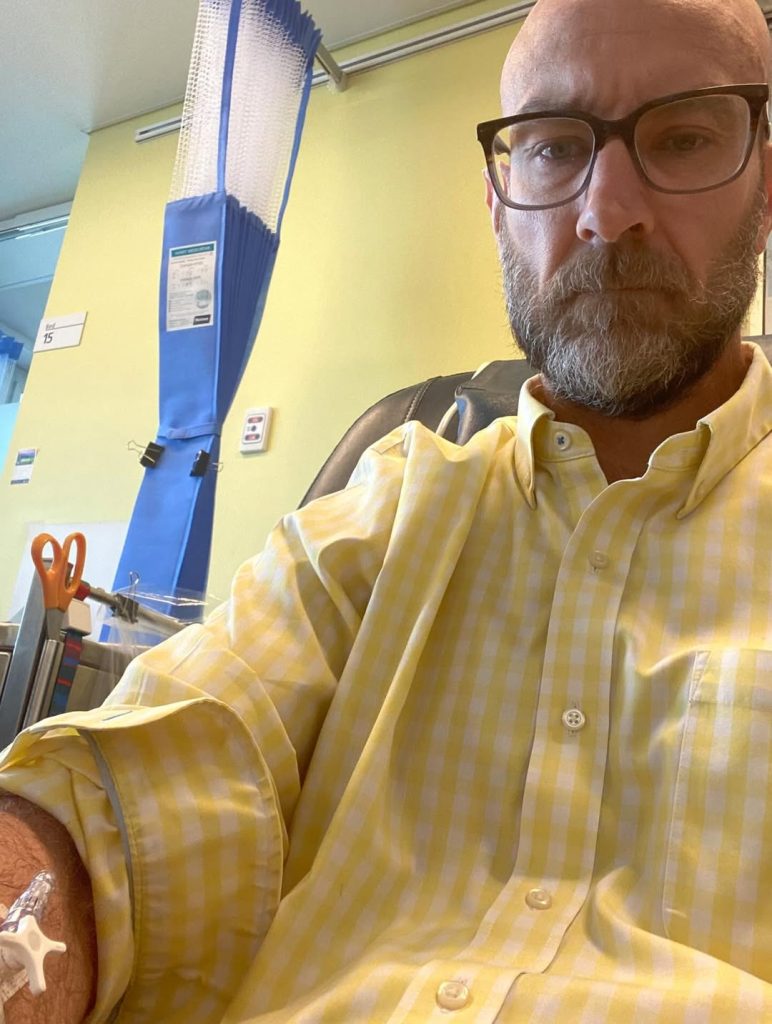
The challenge, which calls on participants to climb the equivalent of 5,000 vertical metres over five days, mirrors Tony’s own uphill battle with multiple myeloma, a rare blood cancer diagnosed in 2022.

For Tony, the challenge has personal meaning. A routine visit to his GP in September 2022 revealed that 95 per cent of his bone marrow was filled with multiple myeloma. At just 40 years old, he was confronting a disease most often diagnosed in people over 70.

Tony Sutton
Photo credit: Instagram/Tony Sutton

Amid rounds of chemotherapy, a stem cell transplant and ongoing treatments, Tony found an unexpected refuge on the trails of Mount Coot‑tha. Encouraged by local mates, he began joining morning walks along the Powerful Owl Trail, a 5.6‑kilometre route with 253 metres of elevation. 

What began as cautious walks evolved into trail running, becoming a form of movement that helped him process the physical and emotional weight of his diagnosis. By the end of 2023, Tony was running up hills he once thought were impossible, each climb marking a step in his recovery.

About the Vertical 5km Challenge

The Vertical 5km Challenge runs from 26 to 30 November and is focused not on distance but on vertical gain. Participants aim to climb 5,000 vertical metres, either in one session or spread over the five‑day period. 

Climbs can take place anywhere — stairs, hills, trails or treadmills — making it accessible across Australia. Whether solo or in a group, every metre helps raise funds for the Leukaemia Foundation, supporting research, patient care and the goal of ending blood cancer by 2035. Participants register online and can record and share their climbs and donations.

Tony’s plan: complete multiple loops of the Powerful Owl Trail each day, climbing from dawn until dusk. He’s inviting the community to join him, even for 20 minutes, or to take on their own #Vertical5kmChallenge. For Tony, each metre gained reflects his own journey of rebuilding strength and perseverance, while also supporting those affected by blood cancer.

His commitment echoes past achievements, such as completing a 100‑kilometre ultra‑marathon earlier this year. But this next climb holds unique personal significance, as it mirrors the physical and emotional challenges he has faced since that life‑changing phone call in 2022.


Read: More Than a Menu: How Luna Pizza in Bardon is Building Community


Supporters can back Tony by donating to his campaign or by taking up the Vertical 5km Challenge themselves. Every step taken and every dollar raised helps the Leukaemia Foundation continue its work in improving outcomes for Australians affected by blood cancer.

Published 7-November-2025

Rightsizing, Not Downsizing: Finding More Life in Just the Right Space at Somerset Indooroopilly 

With average life expectancy now stretching into the mid-80s, many Australians are realising that the family home—once a symbol of success—can quietly become a source of work and worry.

Nearly three-quarters of over-75s still live in houses larger than they need, while about 30 per cent are considering a move that fits their lifestyle today rather than the one they built decades ago.

Those themes will be be at the heart of Coffee & Conversations on 12 November 2025, where locals can hear about Somerset Indooroopilly—a new village that allows locals to downsize in the area they know and love.

Photo Credit: Somerset Indooroopilly

Set beside the Indooroopilly Golf Club, Somerset is a series of light-filled apartments around shared gardens, terraces and a café rather than cul-de-sacs and fences. The aim is to make life simpler without making it smaller.

Designed by Cox Architecture and built by Woollam Constructions, the whole complex is shaped around the concept of rightsizing: a lifestyle that trades maintenance for meaning, routine for connection, and isolation for ease.

Photo Credit: Aura Holdings

The shift speaks to a broader cultural change. Retirement communities are no longer seen as endpoints but as extensions of an active life. Research shows residents in such settings are physically healthier, more socially engaged and report higher overall happiness than those ageing alone. It’s less about giving things up than gaining back time—the chance to travel, volunteer or just enjoy an unhurried morning coffee.

Research shows that residents of well-designed retirement villages are more active, more socially engaged and less likely to need hospital care than peers who continue living alone.

People living in retirement communities can experience a reduction in patterns of hospitalisations, have the potential to reduced need for GP visits, and can stay healthy living independently.

RLC Report Better Housing for Better Health

Increasingly, people are choosing communities that give them freedom and flexibility, not just a smaller footprint. In practice, that means more time spent walking, reading, travelling—or simply enjoying a catch-up with friends—without the endless to-do list that comes with a large property.

At Somerset, that philosophy is built into everyday life, capturing that balance through thoughtful design. Apartments open onto gardens and shared terraces; the café hums with conversation; and facilities like the pool, gym, and library encourage activity without pressure.

Photo Credit: Aura Holdings

Each home includes a 24-hour monitored EEVI system for peace of mind, while a Village Manager and Wellness Advisor ensure help is close by but never intrusive. “Knowing the place is managed, looked after and secure—that’s a big factor,” one resident said. “It’s lovely knowing you’re in a safe area, surrounded by good people.”

The community is pet-friendly, the gardens maintained, and the atmosphere quietly sociable. “Moving here gave me freedom,” said another resident. “I can just close the door and go.”

For many, that’s the essence of rightsizing—choosing a space that fits this stage of life as comfortably as the last one did. “When you make the choice sooner rather than later, you give yourself the gift of freedom and the chance to enjoy more of what matters,” Aura Director Mark Taylor said at a recent Somerset event.

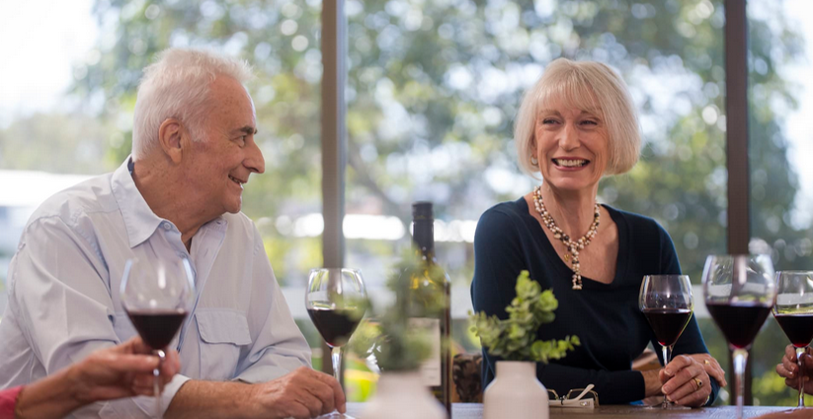
Pictured (L-R) Somerset Residents: Elsie, Ross, Elaine and Iris Photo Credit: Aura Holdings

And for anyone curious, participating in Coffee & Conversations on 12 November 2025 offers the simplest introduction: a walk through the gardens, a cup of coffee, and a conversation about how less maintenance can make room for more living.

Aura Holdings is a Proud Promotional Partner of Brisbane Suburbs Online News

Published 6-November-2025

The Streets of Bardon: How Time Reshaped Local Thoroughfares

Brisbane has witnessed several street name changes over the decades, reflecting its growth and development. In Bardon, three notable instances highlight how urban expansion, local institutions, and city planning have shaped the neighbourhood’s streetscape from the late 19th century through the mid-20th century.


Read: The House He Never Called Home: Joshua Jeays and the Bardon House


Lugg Street

Photo credit: Google Street View

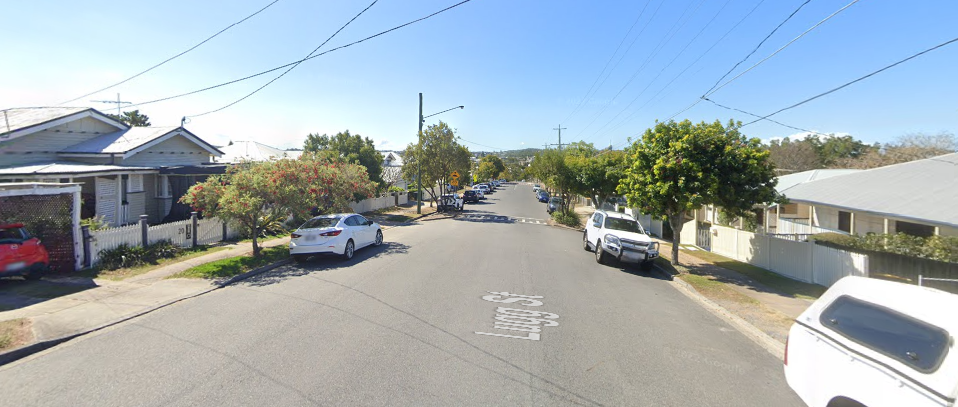
Originally known as School Street, this thoroughfare was renamed Lugg Street between 1917 and 1931. 

Lugg Street, Bardon looking towards the Gap ca 1930s (Photo credit:  James Vincent Bloomer: State Library of Queensland. Image No. 128851)

The street’s history dates back to around 1886 when it was created to provide access to the Ithaca school, now known as Ithaca Creek State School. This change reflects the evolving landscape of the Upper Paddington area in the early 20th century.

Couldrey Street

Bardon
Photo credit: Google Street View

Formerly Third (3rd) Avenue, this street underwent a name change in 1938. The new name, Couldrey Street, was confirmed by comparing street directories from 1938 and 1948. This renaming likely occurred as part of broader urban planning initiatives in the area during the late 1930s.

Bardon
House at Couldrey Street, Bardon (Photo credit: John Oxley Library, State Library of Queensland; 2018 6169 Frank and Eunice Corley House Photographs)

Carmel Street

Bardon
Photo credit: Google Street View

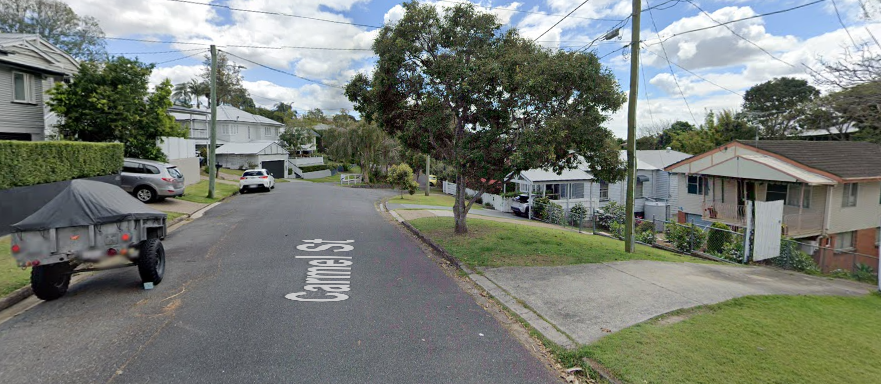
Perhaps the most interesting of the three, this street was originally named Victoria Street. It first appeared on the Jubilee Estate map of 1897 and was still present on a 1920 map. 

Bardon
Former Carmel Presbyterian Church in Bardon (Photo credit: churchesaustralia.org)

However, by 1931, it had been renamed Carmel Street. The new name may have been influenced by the establishment of the Carmel Presbyterian Church in nearby Kennedy Terrace in 1904, showcasing how local institutions can impact street nomenclature.


Read: The Enchanting Fairy House of Bardon Continues to Captivate


These street name changes offer a glimpse into Brisbane’s urban development history, reflecting the city’s growth and the influence of local landmarks on its evolving streetscape.

From the emphasis on education seen in School Street’s creation to the influence of religious institutions evident in Carmel Street’s naming, each change tells a story of community development.

Moreover, these transformations highlight the importance of local history in understanding urban landscapes, reminding us that even seemingly mundane aspects of city life, like street names, can hold rich narratives about a neighborhood’s past and its journey towards the present.

Updated 3-November-2025

Bardon’s Queen Bee: A Legacy of Science and Mentorship

Did you know that Bardon has its very own Queen Bee: entomologist Elizabeth Exley, PhD? Here are five things you may not know about this remarkable woman, who passed away in 2007.


1. One of the Largest Bee Collections in Australia

Dr Exley’s work as a researcher resulted in one of the largest collections of native bee specimens in Australia. Over decades of fieldwork, she meticulously gathered thousands of bees, often from Australia’s northern regions. These specimens are now housed at the University of Queensland’s School of Biological Sciences and form a vital resource for the study of Australia’s diverse native bee species. 

Her collection includes rare species and offers valuable insights into the ecology of native bees. It continues to serve as an essential reference for both students and seasoned entomologists alike, preserving her legacy in tangible form.

2. She Discovered and Named Over 200 Species

A major part of Dr Exley’s legacy lies in her contribution to the taxonomy of Australian bees. She described and named over 200 species during her lifetime, shining a light on the diversity of native bees in Australia. Among her most notable discoveries was the Homalictus exleyea, a species named in her honour, and the Quasihesma clypearis, a bee so small it measures just 1.8 mm in length, making it one of the world’s smallest bees. 

The smallest bee discovered by Bardon's Queen Bee, Elizabeth Exley.
Photo Credit: Aussie Bee

The Queen Bee of Bardon worked on the Colletidae family—many of which are closely associated with Australia’s myrtaceous plants like eucalyptus—was vital in understanding the relationship between native flora and fauna.

3. A Mentor to Australia’s Leading Bee Experts

Dr Exley’s influence reached far beyond her own research. As a professor at the University of Queensland, she played a crucial role in mentoring the next generation of entomologists. Scientists like Tim Heard, Ken Walker, and Helen Wallace credit Exley’s guidance and expertise for shaping their careers. 

Many of these researchers have gone on to make significant contributions to the fields of native bee conservation, taxonomy, and pollination studies. Her dedication to education and mentorship ensured that her passion for native bees was passed on to others, creating a lasting ripple effect in the scientific community.

The Homalictus exleyea, named after the Queen Bee of Bardon
Photo Credit: Garden Room

4. Her Journey to Bees Started with Fruit Flies

Her scientific journey began with fruit fly larvae, the subject of her Honours degree at the University of Queensland. Her early research showcased her meticulous attention to detail and passion for entomology. She then turned her focus to ants, conducting systematic studies that demonstrated her skill as a taxonomist. 

However, in 1958, her career took a decisive turn when she met Professor Charles Michener, a renowned bee expert from the University of Kansas. Mr Michener’s work inspired her to shift her focus to native bees, an area that had been largely neglected in Australia. This change marked the beginning of her lifelong dedication to understanding and documenting Australia’s native bee fauna.

5. Her Research Benefited Australian Agriculture

In addition to her contributions to taxonomy, Dr Exley worked extensively on the role of bees in agricultural pollination. Her research in the 1980s focused on crops like lychee, macadamia, custard apple, and pigeon pea, demonstrating the critical role native bees play in pollination. Her findings not only highlighted the ecological importance of native pollinators but also provided practical insights for farmers, helping improve yields and sustainable farming practices.

By bridging the gap between entomology and agriculture, Dr Exley’s work underscored the value of native bees in supporting both natural ecosystems and commercial industries.

A Local Icon with a Global Legacy

Born in Bardon on 29 November 1927, Elizabeth Exley’s story is one of a local girl whose contributions reverberated globally. Her legacy includes her groundbreaking research, her mentorship of future scientists, and her commitment to preserving Australia’s natural history. 


Her work remains a source of pride for the Bardon community, where her roots in natural history were first nurtured by her family. From the streets of Bardon to laboratories and field stations across Australia, Dr Exley’s life and career demonstrate the profound impact of dedication and curiosity.

Updated 18-October-2025

St Joseph’s Bardon Wins STEM Competition With AI Project to Help the Elderly

When students at St Joseph’s Bardon began brainstorming ways to use technology for good, they had no idea their ideas would lead them all the way to a national stage. But that’s exactly what happened when their project, The Family Press, won first place in the primary category of the Brisbane Catholic Education STEM MAD competition — the largest yet, with more than 120 teams from over 50 schools.


Turning a Personal Story Into a Winning Idea

The Family Press team’s idea was born from a deeply personal experience. One team member had watched their great-grandfather struggle with loneliness in aged care, and it sparked a question: Could technology help older Australians feel more connected to their families? 

Their answer was a personalised, AI-powered news-sharing system designed to deliver family updates, photos, and messages directly to elderly users, helping them stay part of everyday life even when separated by distance.

Judges praised the project for its blend of innovation and empathy, and it was this combination that secured St Joseph’s Bardon the top spot. The win also means the team will represent both their school and Brisbane Catholic Education at the national STEM MAD finals in November 2025. It’s a major milestone for the students and their teachers.

Technology With Heart

Another St Joseph’s Bardon team, Hug to Heart, also impressed at the competition with their own compassion-driven project. They designed an interactive teddy bear that can send hugs remotely, offering comfort and emotional support to children undergoing long hospital treatments for leukaemia. While this team didn’t take the top prize, their work was recognised for its creativity and potential to make a difference in young patients’ lives.

St Joseph's Bardon
Photo Credit: Supplied

STEM Education Officer Claire Byrne said projects like these show what happens when students are encouraged to think beyond the classroom. By focusing on real-world challenges and designing with empathy, they learn not just how to build technology — but how to build solutions that matter.


A School Looking Ahead

The excitement of this win comes as St Joseph’s Bardon looks to the future. The school is inviting new families to join its inclusive community, with places available from Prep to Year 6 for 2026. Families of all faith backgrounds are welcome to explore enrolment through the school website or by calling 07 3369 3020.

Published 15-Oct-2025

Queensland’s Assault Crisis Reaches Bardon As Locals Call For Action

Bardon is seeing a rise in assault cases as Queensland records its highest levels of violent crime in decades, according to new Australian Bureau of Statistics data.


Statewide Figures Confirm Alarming Increase

ABS data for 2024 shows almost 10,000 Queenslanders were victims of sexual assault, an 11 per cent rise from the year before. Assault cases also rose by more than 3,000, marking a second straight year of increase. 

Photo Credit: ABS

Queensland recorded 61,644 assaults, second only to New South Wales. More than half occurred in homes, highlighting concerns about domestic and family violence. In Bardon, police data mirrors this trend, showing more reported assaults in both domestic and public settings.

Community Concern Grows

Authorities report growing concern about safety in Bardon as assault cases rise. Support groups call for more education on consent and domestic violence, noting most victims are women and children.

While break-ins and car thefts have slightly decreased across Queensland, violent crimes continue to rise. The state also reported 27 female victims of domestic violence-related homicide in 2024, the highest figure in a decade.

Government Response And Policing Efforts

Queensland’s government has acknowledged the figures show too many people are being harmed, despite the rate of increase slowing slightly compared with previous years. Officials said new measures, including expanded police powers and ankle monitoring for high-risk domestic violence offenders, are aimed at addressing repeat and violent offences.

Photo Credit: Canva / For Illustration Purpose Only

Premier David Crisafulli has tied his leadership to lowering victim numbers and pledged to align crime victim rates with population growth. Local authorities in Brisbane’s western suburbs have also been encouraged to focus resources on prevention and rapid response initiatives.

Bardon Community Looks For Solutions

Bardon residents are taking action through neighbourhood watch programs and awareness drives in schools and community centres. Support groups stress early reporting, counselling, and trauma-informed policing. 


The state continues to face rising violent crime despite fewer property offences. For Bardon, tackling assault and domestic violence has become a local priority.

Published 3-October-2025