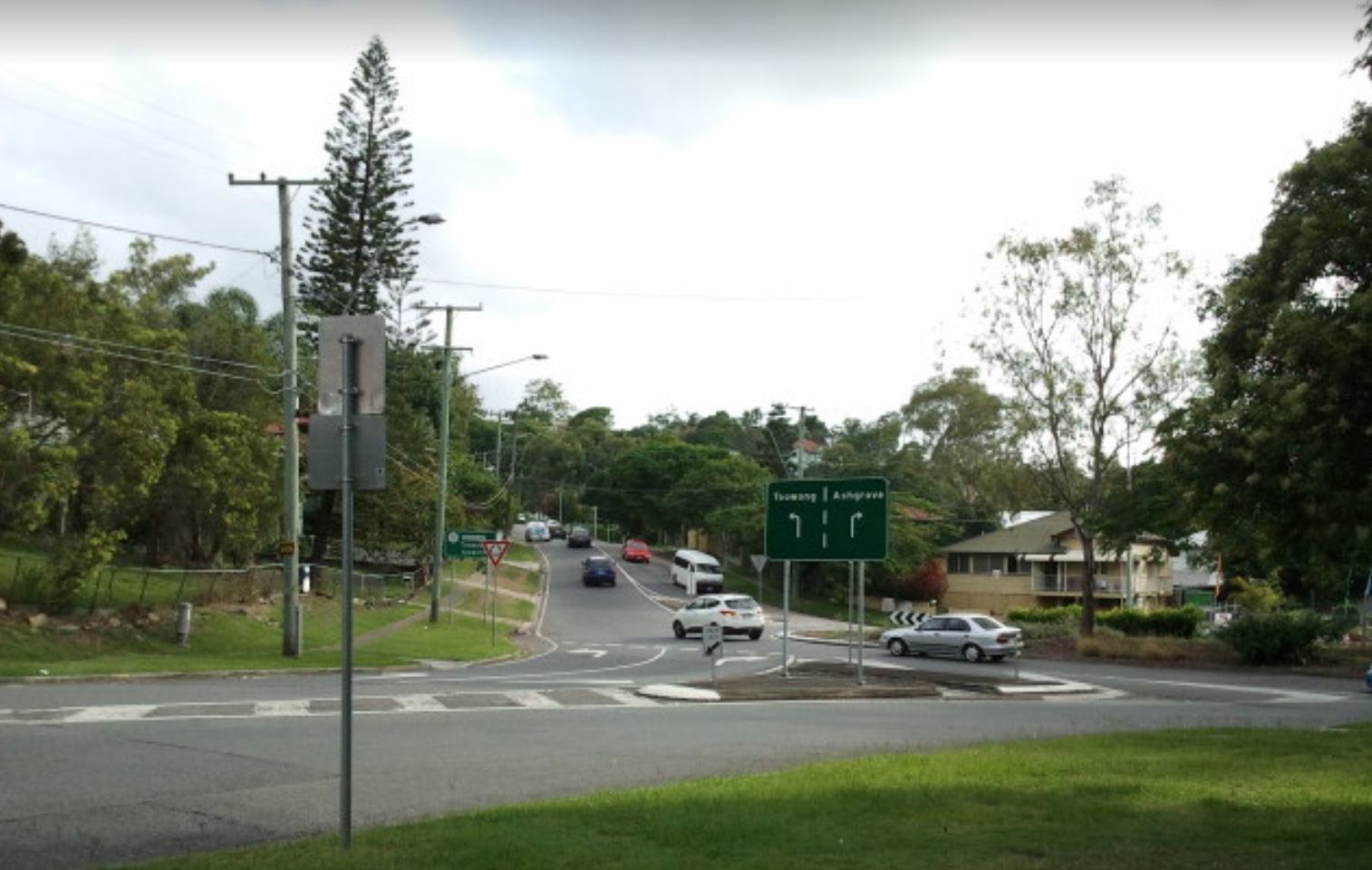



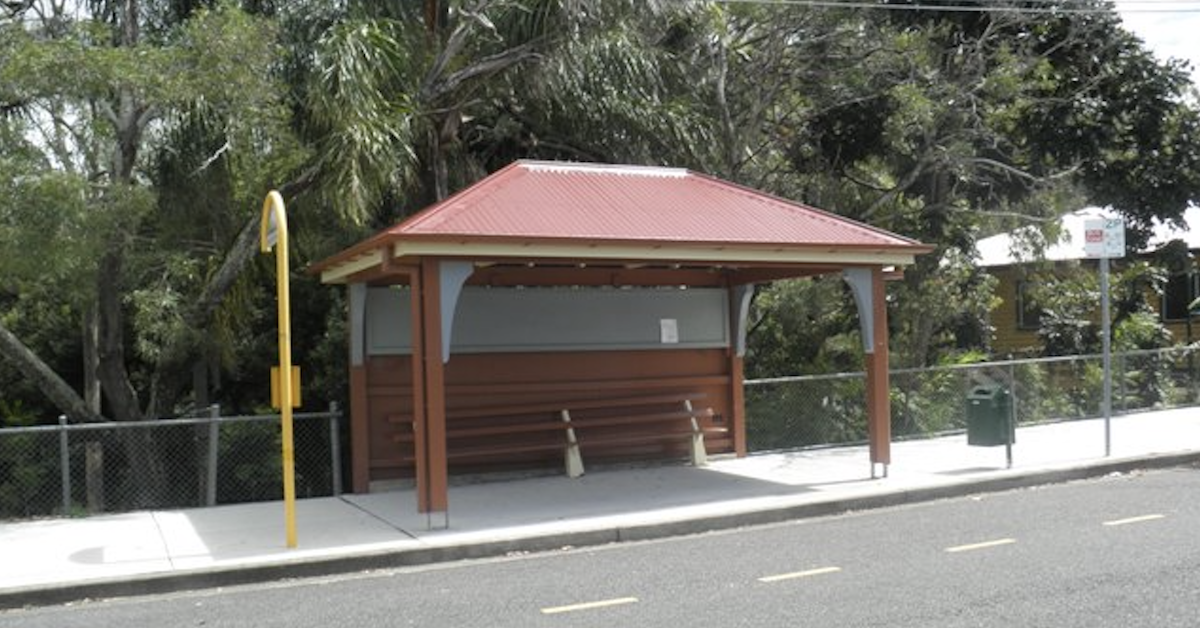
Most people pass it without a second glance. Standing opposite 136 Boundary Road, Bardon, in the Rainworth area, the former Tram Shelter No. 1 looks much like any other suburban bus shelter. Passengers still use it today, just as travellers once did during Brisbane’s tramway era.
Built during the 1930s, the timber structure is one of Brisbane’s surviving tram-era shelters. Its story stretches from the Great Depression to the end of the city’s tram network and into modern-day Bardon, where it continues to serve public transport users.
Here are seven things you may not know about one of the suburb’s oldest pieces of public infrastructure.
The Shelter Arrived as Rainworth Began a New Period of Growth
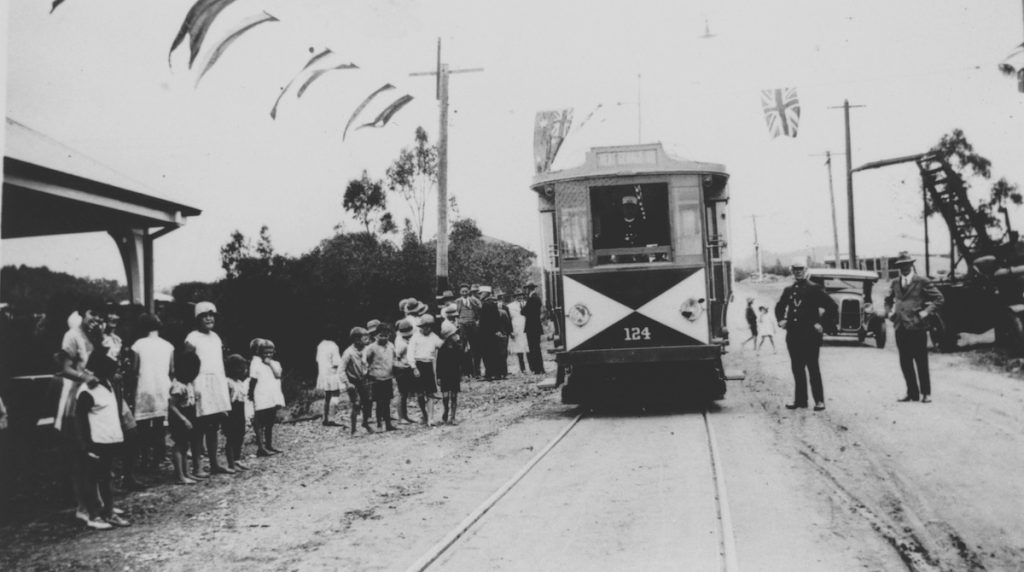
The shelter was built between 1932 and 1939, shortly after Brisbane’s tram line was extended to Rainworth in 1930.
At the time, Bardon and Rainworth were still developing. The extension of the tram service improved connections to the city and encouraged further residential growth in the district. According to the Brisbane Heritage Register, many interwar homes later became a feature along the tram route on Boundary Road.
The shelter was built during this period of expansion, becoming part of the transport infrastructure that supported a growing community.
It Was Built During the Great Depression
The shelter’s construction coincided with one of the most difficult economic periods in Australia’s history.
It was built as part of a Brisbane City Council works program designed to alleviate unemployment during the Great Depression. While modest in scale, projects like this provided jobs while also improving local infrastructure.
Today, the structure serves as a reminder of a time when public works projects were used to support communities facing economic hardship.
Local Residents Helped Shape Public Transport Facilities
One of the lesser-known aspects of Brisbane’s tram system is the role played by local communities.
Historical records show that many tram shelters across Brisbane were built after residents, community groups and progress associations petitioned the council for better facilities. Council would often assess usage levels before deciding whether a waiting shed was needed.
The Rainworth shelter reflects a long tradition of community advocacy helping shape local infrastructure. Long before online petitions and community Facebook groups, residents were already pushing for improvements to make daily travel more comfortable.
Waiting for Public Transport Looked Very Different in the 1930s
Today, many passengers check their phones while waiting for public transport. In Brisbane’s tram era, shelters served a broader purpose. They provided protection from the weather, offered seating and were often fitted with lighting for evening commuters.
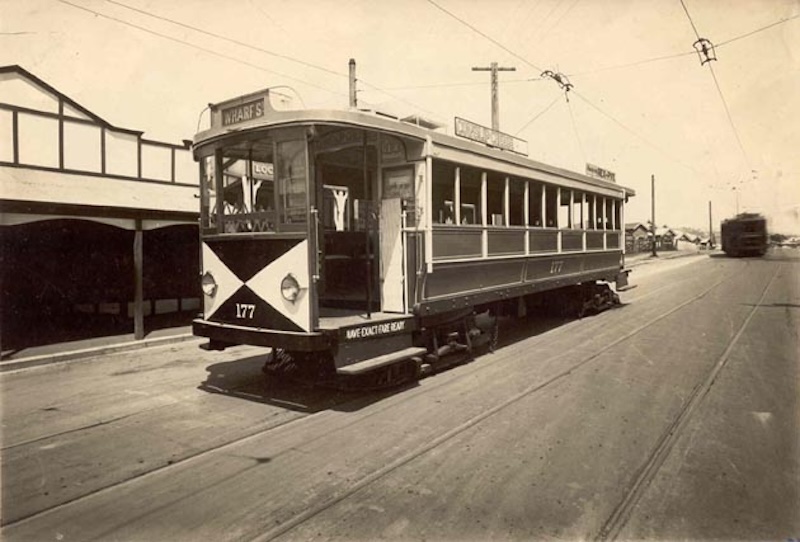
The Rainworth route was also briefly used for an unusual experiment in Brisbane’s tram system. Between 1929 and 1934, several “one-man” trams operated on the Rainworth and Red Hill lines. These services ran without conductors, requiring passengers to enter through the front door and pay the driver directly. The trams were marked with distinctive red-and-white diamond patterns on the front so passengers could identify them. The cost-saving trial was later abandoned and the trams returned to standard operation.
The Rainworth shelter appears to retain much of its original form, including its facing timber bench layout. As a result, it offers a glimpse into what everyday travel looked like for Brisbane residents almost a century ago.
A Depot Fire Helped Change the Direction of Brisbane’s Tram Network
One of the most significant events in Brisbane’s transport history occurred on 28 September 1962. On that day, a fire destroyed the Paddington Tram Depot and 67 trams, representing about 20 per cent of the city’s fleet. The loss placed significant pressure on Brisbane’s transport system.
At the same time, private car ownership was increasing and city planners were looking at ways to accommodate growing traffic volumes. The State Library of Queensland describes the depot fire as a major event in the decline of Brisbane’s tram network.
The shelter on Boundary Road survived these changes, even as the transport system it was built to support entered its final years.
The Trams Disappeared, but the Shelter Stayed
On 13 April 1969, Brisbane’s final tram completed its last journey. For many residents, it marked the end of an era that had shaped the city for more than eight decades. In the years that followed, much of Brisbane’s tram infrastructure disappeared.
A number of former tram shelters were either moved or demolished as roads were upgraded and the city changed around them.
The Rainworth shelter remained in place. Rather than becoming another lost piece of infrastructure, it adapted to changing transport needs and continued serving passengers using bus services along Boundary Road.
Nearly 90 Years Later, It Still Serves the Purpose It Was Built For
Perhaps the most remarkable thing about the former tram shelter is that it remains useful.
Many historic structures survive as preserved landmarks, but the Rainworth shelter continues to function as part of Brisbane’s public transport network. Today, it remains in use by bus passengers. That continuity is increasingly uncommon in a fast-growing city.
The next time you pass the shelter opposite 136 Boundary Road, it is worth remembering that this small timber structure has witnessed suburban growth, the challenges of the Great Depression, the rise and fall of Brisbane’s tram network and generations of residents travelling through the area.
Published 1-June-2026