


A Short Stroll to Paddington’s Art Trail: Your Bardon Neighbour’s Open-Air Gallery

Bardon residents don’t need to venture far to experience some of Brisbane’s most creative public art. Just down the hill in neighbouring Paddington, a vibrant collection of sculptures, murals and mosaics transforms the familiar shopping strip into an unexpected outdoor gallery. It’s the kind of cultural offering that makes living on the leafy fringes of the inner west even more appealing – world-class art within walking distance, or a quick bus ride away.


Read: Bardon’s Queen Bee: A Legacy of Science and Mentorship


The Bright Siders’ Historical Tribute
Art
Photo credit: Facebook/Bizzell’s Garage

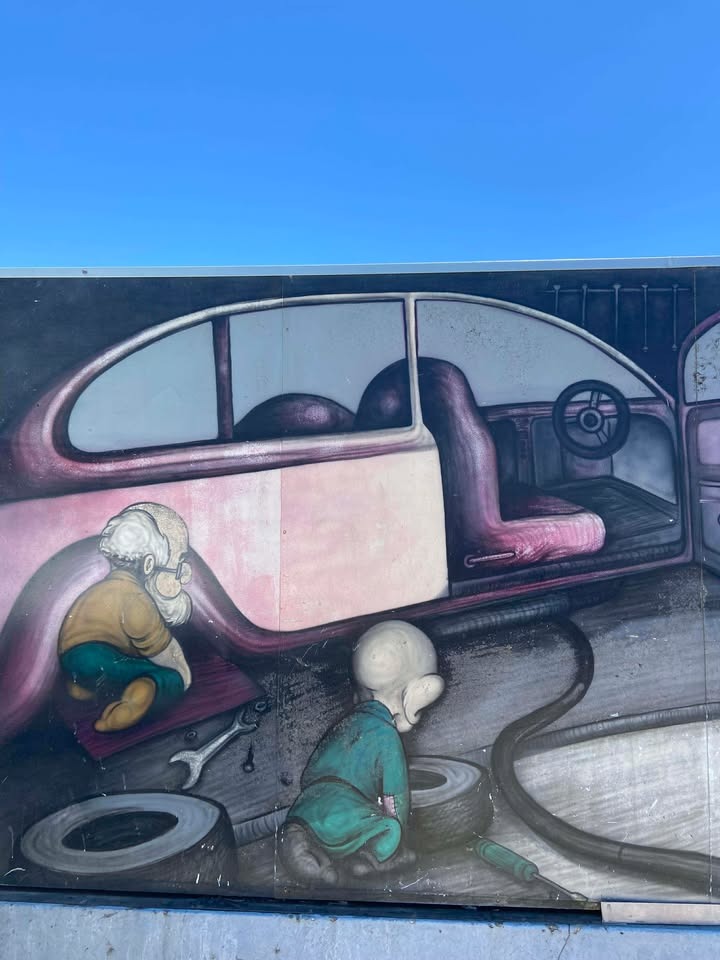
At Bizzell’s Garage, artist collective The Brightsiders have created a mural that honours Paddington’s transport heritage. The artwork depicts the bustling tram scene that defined the suburb during the 1900s, when trams were the lifeblood of the community. The mural serves as a reminder of Paddington’s transport history and the trams that once connected Bardon residents to the city below – the very line that helped shape both suburbs into the residential communities they are today.

Scott Harrower’s Highland Rest
Art
Photo credit: scottharrowerdesign.com

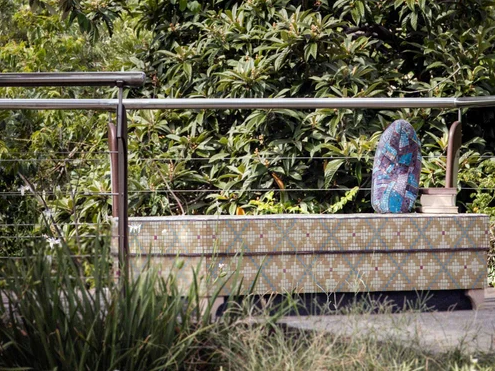
Further along the terrace, you’ll discover Scott Harrower’s “Highland Rest”, a stunning mosaic-tiled bench that offers both respite and visual delight. Harrower’s mosaic work creates a permanent installation that functions as both art and amenity. The intricate patterns reward close inspection, making it an ideal spot to pause during your shopping expedition or weekend wander.

The Kooka! Trail: Paddington’s Signature Sculpture Walk

Art
Photo credit: Facebook/Debra Hood Art

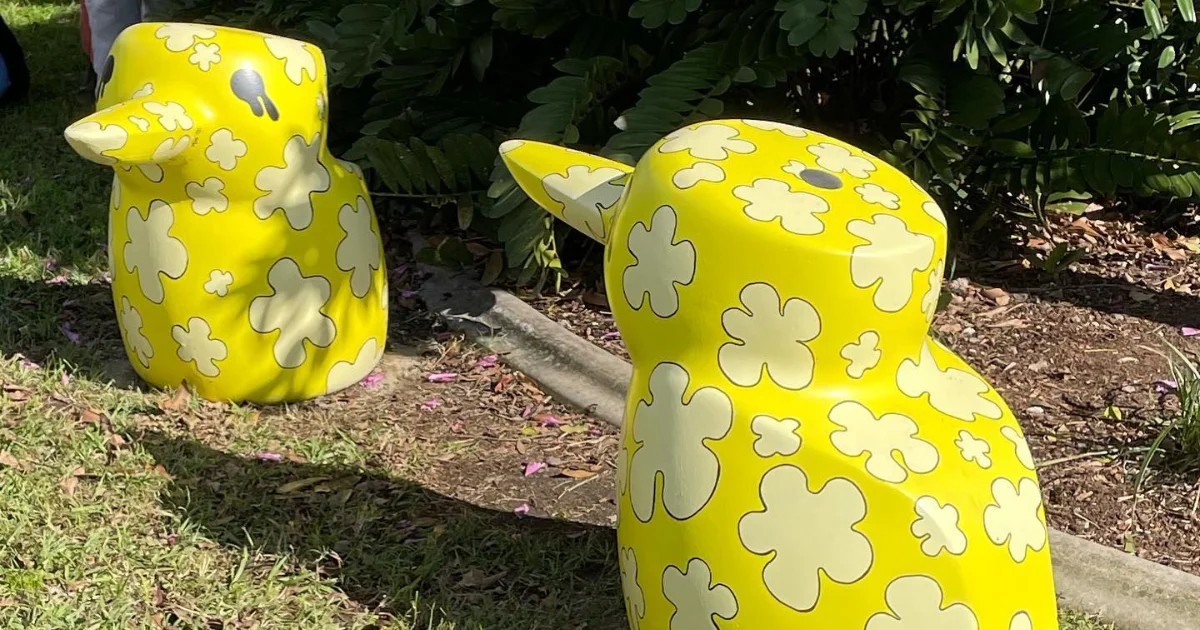
The highlight of Paddington’s public art offering is undoubtedly the Kooka! Trail, featuring 16 vibrant kookaburra sculptures scattered along Latrobe Terrace and Given Terrace. Launched in 2022 through Brisbane ‘s Paddington Terraces Precinct Grant Project, these sculptural seats are far more interesting than your average street furniture.

Each sculpture was made from waste materials before being reimagined by local artists into functional seating that celebrates the laughing kookaburra. Brisbane design collective Derlot created the base forms, while individual artists added their distinctive interpretations.

Debra Hood decorated her kookaburra with delicate dotted patterns inspired by Brisbane’s springtime blooms. Zoe Porter’s “Latrobe Kookaburra” features the vivid pinks, yellows and greens of galahs, cockatoos and lorikeets, weaving native bird species into traditional kookaburra markings. Torres Strait Islander artist Tori-Jay Mordey created “Care and At Night”, a thoughtful reflection on the struggles native wildlife face in urban settings.

One particularly moving sculpture represents five cultural groups – Irish, Hungarian, Croatian, Polish and Italian – commemorating the Catholic immigrant families who made Paddington home between the 1940s and 1970s. Other contributing artists include Rick Hayward, Stephen Mok, Hailey Atkins and Spectator Jonze, each bringing their unique artistic voice to the project.

Making the Journey

For Bardon residents, accessing Paddington’s art trail couldn’t be easier. You can walk down Latrobe Terrace from the Bardon end towards Given Terrace and Suncorp Stadium, turning the journey into a leisurely afternoon outing. Multiple bus routes service the area if you prefer to save your energy for the return uphill journey.


Read: More Than Meets the Eye: Uncovering the Hidden Stories of Rosalie


Between artworks, you’ll pass the cafés and boutique shops that make Paddington such a popular destination for Bardon locals. The entire art trail experience is free, making it an ideal outing for families, a creative date idea, or simply a fresh way to experience a familiar neighbourhood.

Living in Bardon means having access to nature reserves, quiet streets and community spirit. But it also means being minutes away from cultural experiences like Paddington’s public art trail – proof that the best galleries don’t always have walls, and the best exhibitions are sometimes just a short walk from home.

Published 31-January-2026
Rosalie’s Hall with Secret Layers Reveals a Century of Community Life

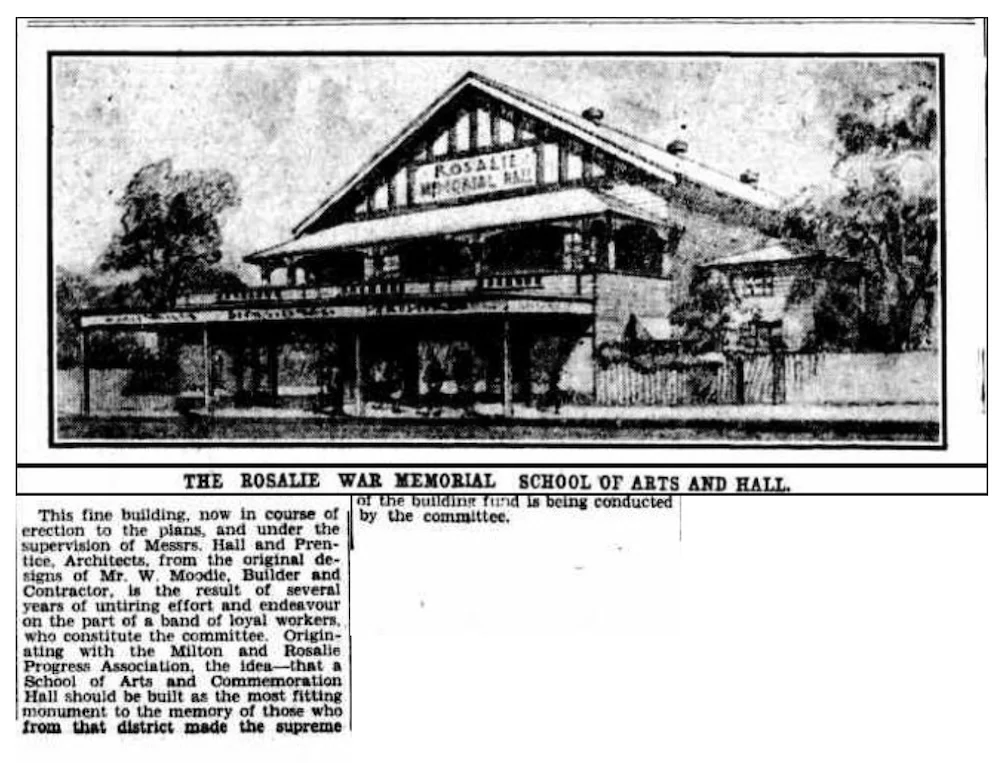
In Rosalie, a modest timber hall on Nash Street has always been more than it appears: built as a place to gather and remember, it was designed with shops tucked beneath the main hall, quietly funding community life while generations met, mourned, danced, learned and watched movies upstairs — a layered landmark that mirrors Rosalie’s own hustle and heart.


A hall designed to pay its own way

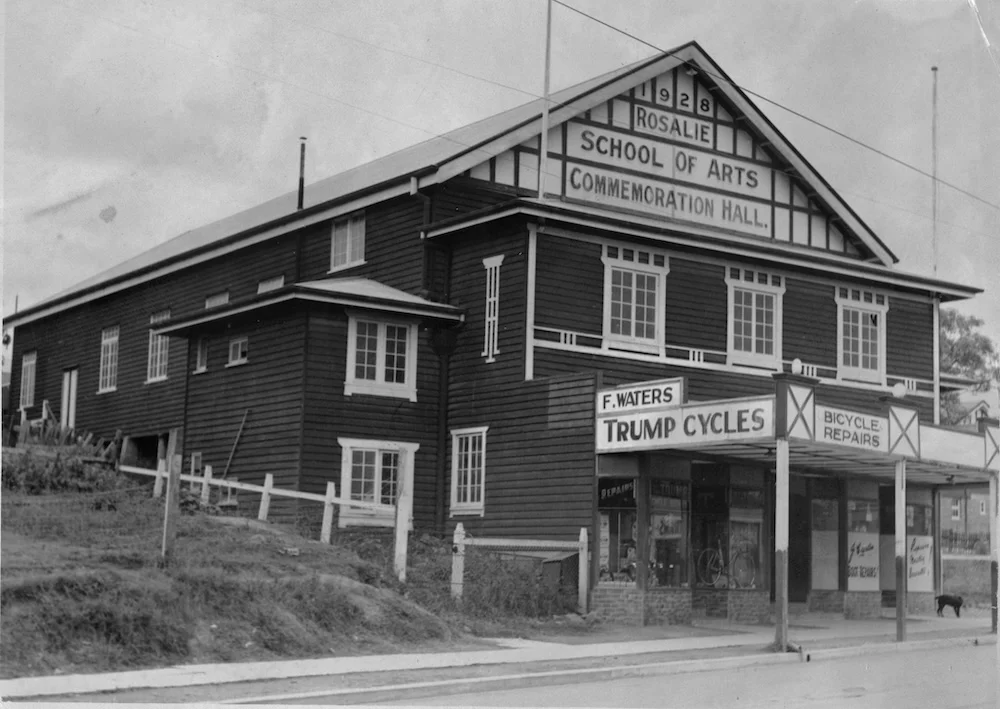
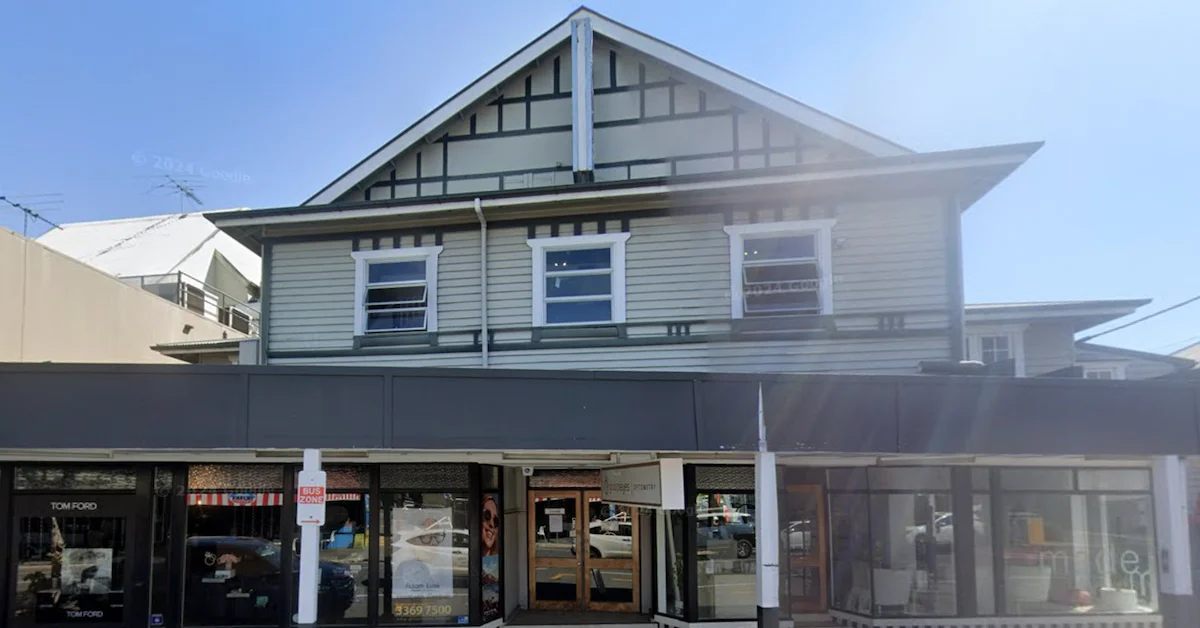
Walk past the former RSL Hall at the corner of Nash and Elizabeth streets, and it’s easy to miss the ingenuity built into its structure. The main hall sits above street level, while two shopfronts below — numbers 16 and 18 Nash Street — were deliberately included to generate income. 

Rent from these businesses helped service the mortgage and keep the building operating, a practical solution by residents determined to sustain their own cultural hub.

This blending of idealism and realism was typical of Queensland’s Schools of Arts, which emerged across the state as towns and suburbs matured. According to the heritage overview, these institutions were often the first centres for adult education, debate and performance, at a time when books were costly and public libraries rare.

Photo Credit: Wikipedia

Why Rosalie — and why this site

The hall’s location was not accidental. A parkland site near Milton State School was initially offered, but the committee opted for the Nash Street corner block instead. An 1895 map labelled the park area “Red Jacket Swamp”, making higher ground more appealing for a permanent civic building.

Although the hall’s street address now places it in Paddington, Rosalie has long been recognised as a locality within the suburb, identified by residents well before modern council and postal boundaries were formalised. Historic maps and local records show Rosalie as a distinct pocket, with its own village centre clustered around Nash Street, Gregory Park and nearby schools.

Rosalie itself was developing rapidly by the early twentieth century. Nestled within Paddington, the locality grew alongside Brisbane’s tram network and expanding suburbs, evolving from semi-rural fringes into a close-knit residential pocket. Local history records note that Rosalie’s name likely derives from a Darling Downs grazing station owned by John F. McDougall, an early landholder in the area

The Rosalie School of Arts Commemoration Hall was named for the community it served, not a postcode. While later administrative changes absorbed Rosalie into Paddington for official purposes, the name has endured in local use — a reminder that neighbourhood identity often outlasts lines drawn on maps.

Education, remembrance and community life

When the hall opened in 1928 as the Rosalie School of Arts Commemoration Hall, it carried a dual purpose. It was both a centre for learning and social life, and a war memorial — reflecting the profound impact of World War One on Australian communities.

Photo Credit: Monument of Australia

Across the country, thousands of memorials were built as families mourned servicepeople buried overseas. In Rosalie, remembrance was woven into daily life: lectures, concerts, meetings and library visits took place under a roof dedicated to those who had served.

The hall quickly became a hive of activity. A kindergarten operated there in the late 1920s and early 1930s, public meetings filled the calendar, and the space hosted dances, exhibitions and celebrations that helped define Rosalie’s social rhythm.

From memorial hall to veterans’ home

By 1934, the building had become the birthplace of the local Returned Sailors’, Soldiers’ and Airmen’s Imperial League of Australia sub-branch, later known as the Returned & Services League (RSL). The organisation would go on to shape the building’s future, reflecting Rosalie’s strong ties to returned servicepeople.

In 1946, ownership of the hall was formally transferred to the RSL under state legislation. The library collection moved to council facilities, and the building’s role shifted more squarely toward veterans’ affairs, while still remaining open to broader community use.

Lights, camera, Rosalie

One of the hall’s most unexpected chapters came during and after World War II, when it transformed into the 300-seat Beverley Theatre. On multiple nights each week, locals gathered to watch films without travelling into the city.

The Beverley Theatre joined a now-lost network of suburban cinemas that once animated Paddington and surrounding areas, turning community halls into shared entertainment spaces and reinforcing their role as social anchors.

While movies played and meetings unfolded upstairs, the shops beneath the hall continued their steady service. Over the decades, they housed a dressmaker, bootmaker, bicycle shop and a maternal and child welfare clinic — providing everyday services while financially underpinning the building itself.

Today, those commercial spaces remain active, just as the hall above continues to evolve.

Still adapting, still gathering

Alterations over time — new windows, changed awnings, enclosed stairways — reflect the hall’s ongoing adaptation. The interior has been renovated, and the main hall now operates as a fitness centre, while the RSL continues to lease it for meetings and commemorative events.

As Brisbane grapples with questions of density, development and heritage, Rosalie’s hall stands as a reminder that community buildings endure not because they stay the same, but because they adapt. Built on practical foundations and collective effort, it remains a living part of Rosalie’s story — layered, resilient and still in use.


Published 29-Jan-2026

Israeli Restaurant Yababa Offers Rosalie Village Delicious Vegan Meals

Did you know that Yababa, one of the latest restaurant additions to the Rosalie community, serves delicious, plant-based, Israeli cuisine?


After relocating to its new spot along Baroona Rd, the vegan Israeli restaurant Yababa opened its doors to the Brisbane public once again in early April 2021, offering people a slew of 100% plant-based dishes made entirely on-site. 

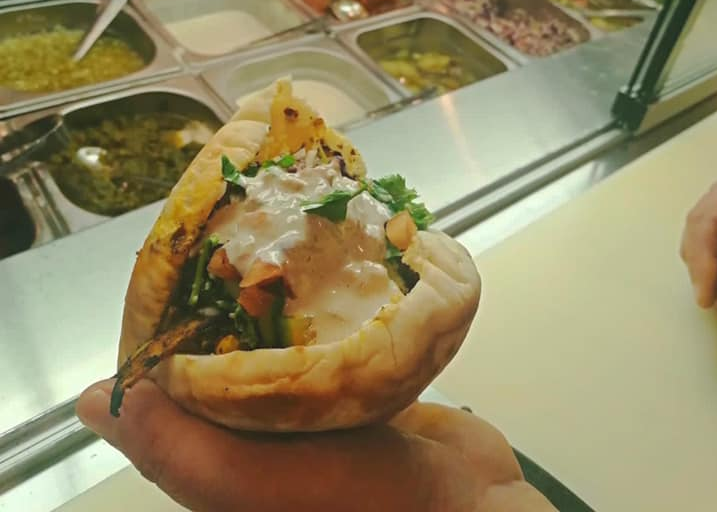
One of the restaurant’s specialties is their delicious pocket pita bread as there are many different fillings to choose from, ranging from the classic falafel, to shawarma, all the way to hummus and salads. Prices range from $10 to $20 depending on the filling inside each sandwich, with the most expensive being the falafel meal deal which comes complete with small chips and a can of soda. 

Photo credit: Facebook/Yababa

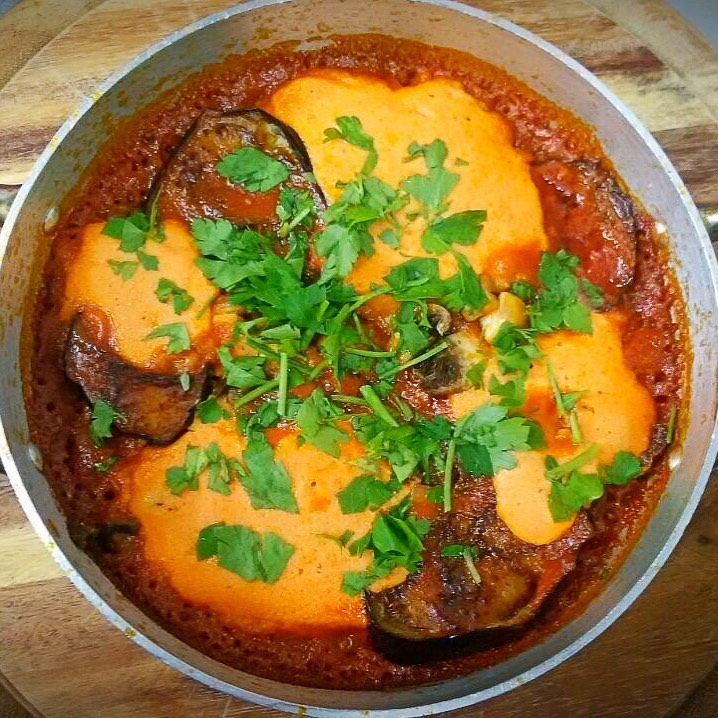
Other meals in their menu include Middle-Eastern classics such as hummus bowls which also come with many options. Customers will be able to indulge themselves with classic hummus, however they will also be able to order mesabecha — a hummus bowl served with a mix of warm chickpeas, tahini and garlic-lemon sauce. There is also Yababa’s Shakshuka, a spicy tomato and capsicum-based meal topped with two vegan eggs on a frying pan with pita bread, pickles, and tahini. 

Photo credit: Facebook/Yababa

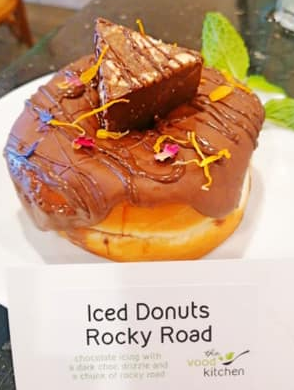
Savoury meals aren’t the only thing available at Yababa, for the restaurant also has much to offer in the way of vegan desserts and sweets to top off main courses. They even offer vegan tarts, donuts and cakes made with substitute ingredients for those with dietary restrictions. One of their most eye-catching desserts is the Iced Donuts Rocky Road.

Photo credit: Facebook/Yababa

Reviews have generally been positive, with many happy customers lauding the restaurant’s friendly staff and delicious food. 

Absolutely delicious food. I had the gluten free veggie pattie plate and every single component of it was amazing. The staff were also really friendly  and the chef came out to say hi and check on how the meals were going. Can’t wait to come back.

Niki K.

Thank you my Pita was amazing. So tasty 🙂. I appreciate how much you cared that it was fresh for me!! Your service was lovely.

Katie C.

Absolutely delicious! Great hospitality and service, fresh ingredients- winner!

Maya C.

Yababa can be found at 1/151 Baroona Rd, Paddington, open from 11:00 a.m. to 2:00 p.m. and 5:00 p.m. to 8:00 p.m. on Tuesdays to Thursdays, and 11:00 a.m. to 8:00 p.m. on Fridays to Sundays. For more information, and for the latest updates on meals, deals, dates, and other special announcements concerning the restaurant, follow their Facebook page